














Skip to content

AI-powered search for image and video collections

When item-level description is sparse or missing, visual search lets users explore collections by content - objects, scenes, text, styles - not just metadata.

Artboard 1@4x
  • Many large image and video collections have little or no item-level description. Even with extra funding or temporary staff, it's not realistic to catalogue every frame or file.
  • Visual search uses AI to identify the visual content of each image or video - making entire collections discoverable by what's in the image, not just what's written about it.
  • You decide how visual search fits into your existing online catalogues and public portals - as a standalone tool or as a complement to traditional metadata search.

We collaborate with archives, libraries, and museums across Europe and beyond to push the boundaries of what AI can do for cultural heritage

bern_flooding

From images to visual data

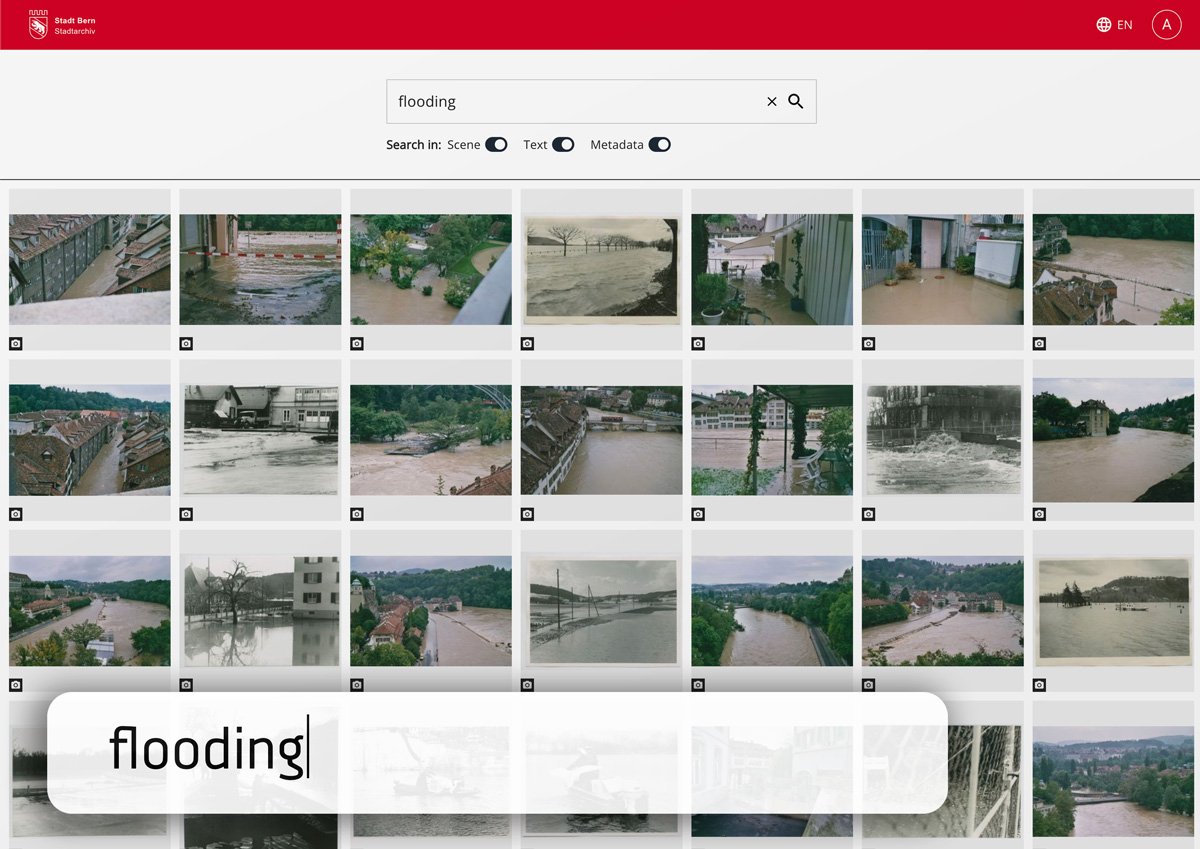
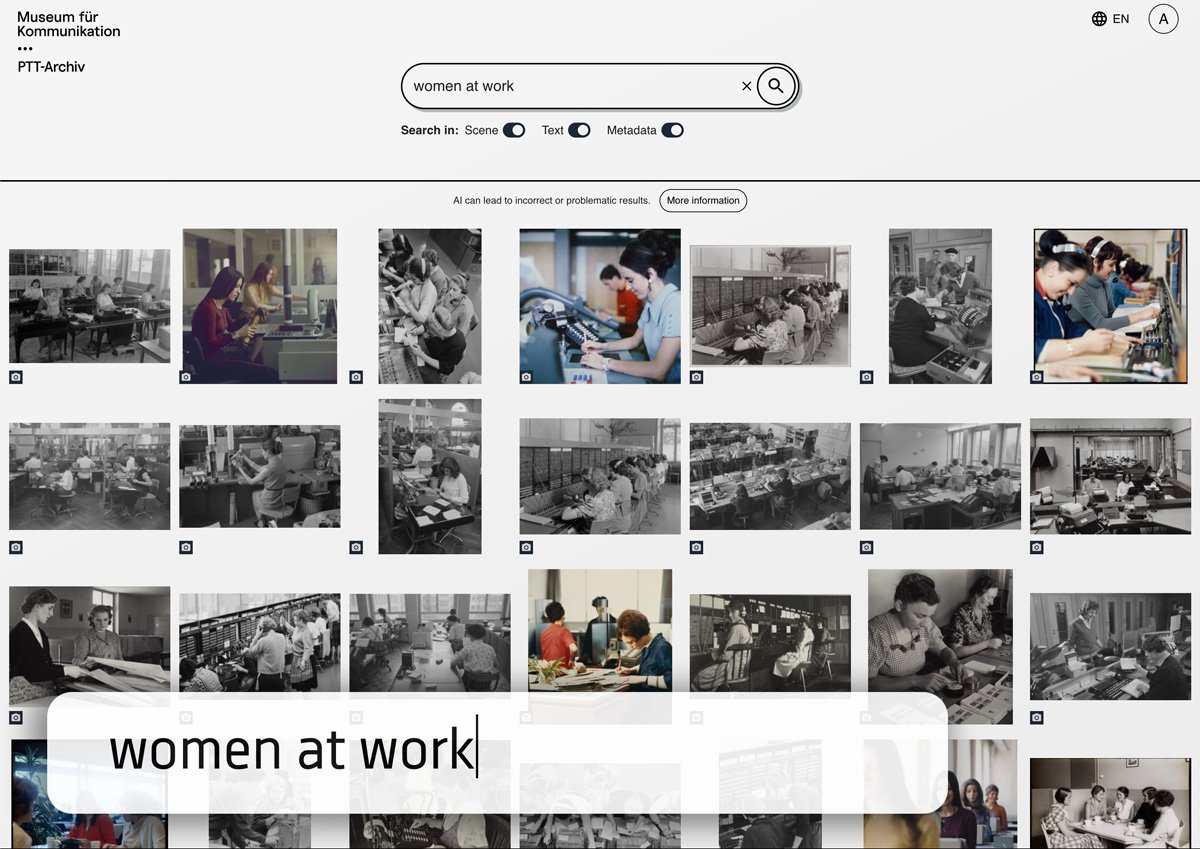
AI looks at every image or video frame and identifies what is shown: people, objects, places, text, scenes and visual styles. Each file is assigned a “visual signature” that captures its content, without relying on any existing subject headings or descriptions.

ptt_women-at-work

From visual data to matches

When someone searches, their text query (or, in some setups, an example image) is also turned into a visual signature. The system then compares this signature to all signatures in the collection and returns the closest matches.

Gait image

From matches to exploration and research

Visual search is for exploration and pattern-finding. It makes an entire collection explorable, which is essential when item-level descriptive metadata is sparse or missing. In well-described collections, it offers a different way of seeing the material: researchers can switch to image-based search when their question is visual, then return to the catalogue for creators, series, dates and context. The two modes work together: find by content, understand by metadata.


Visual search projects with our clients

bildschirm-bar-en

Swiss Federal Archives

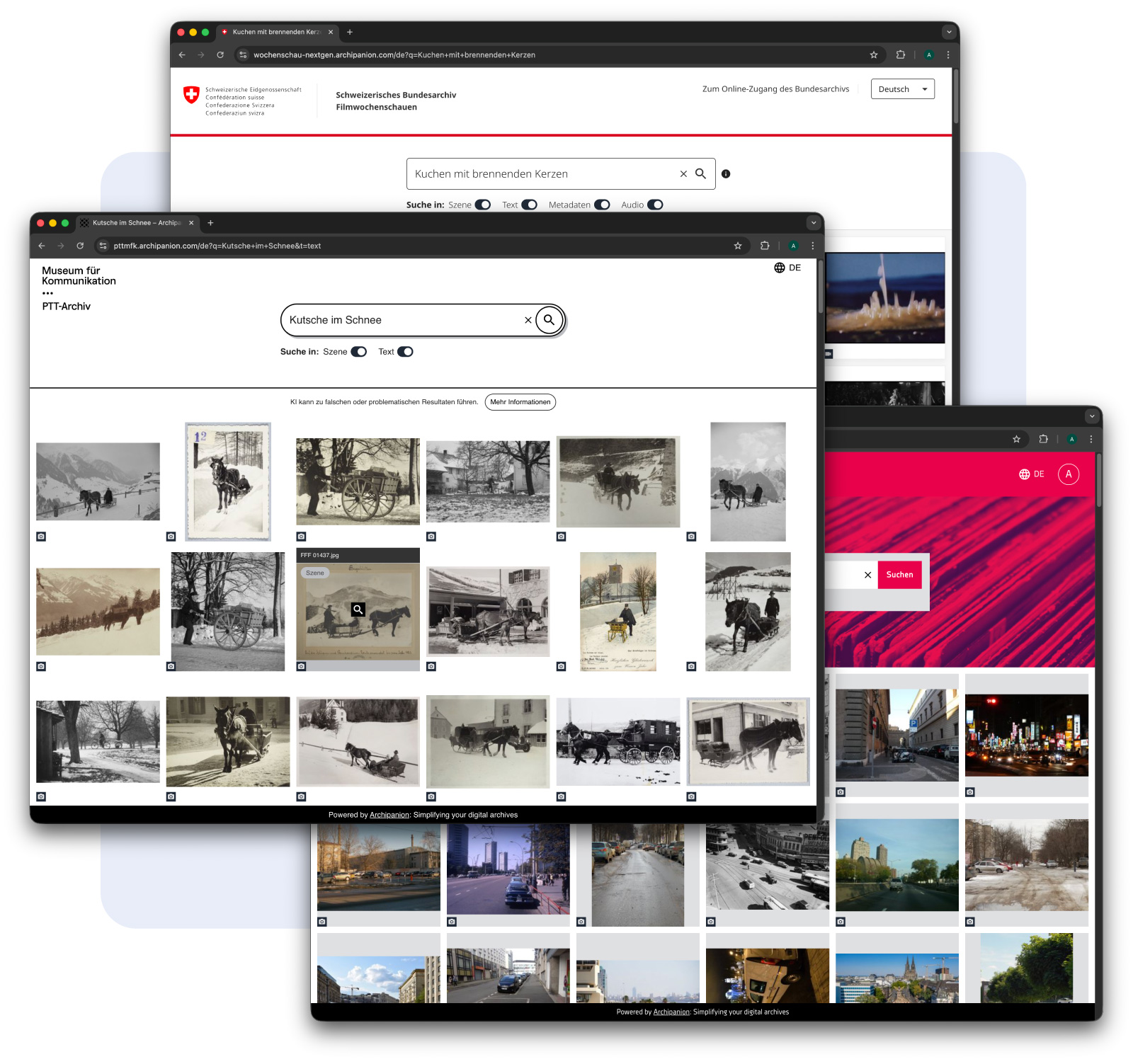
More than 200 hours of historical Swiss newsreels from 1940–1975 are now searchable by visual content. Researchers can look for specific scenes or on‑screen text across the entire run of films, instead of scanning footage manually or relying only on catalogue descriptions.

screen-valid

Galt Museum & Archives

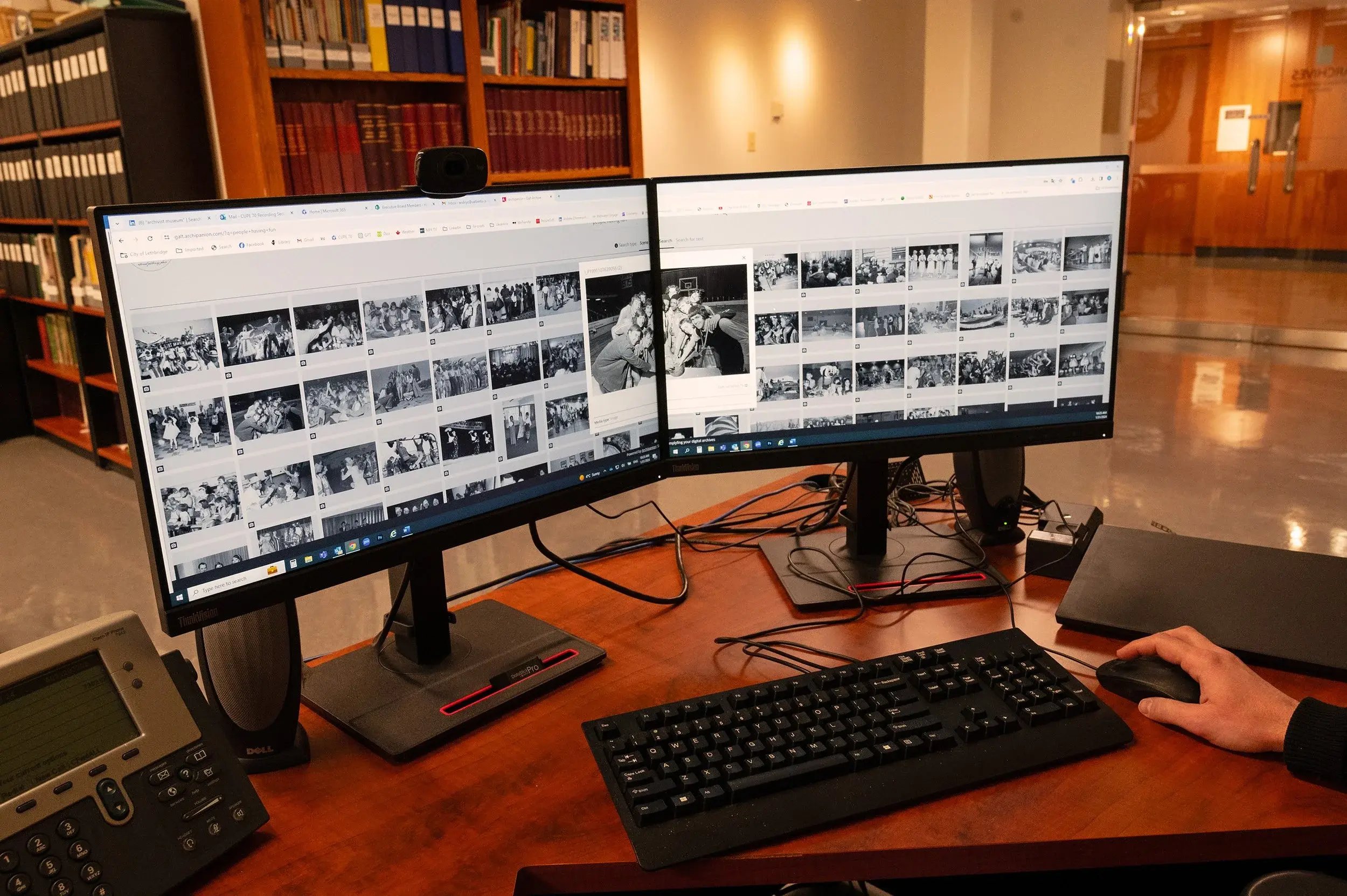
Visual search is being used to unlock tens of thousands of Lethbridge Herald press photographs that were scanned but had little or no metadata. This has turned a previously inaccessible collection into a searchable online resource.

bildschirm-ptt-en

PTT Archive / Museum for Communication

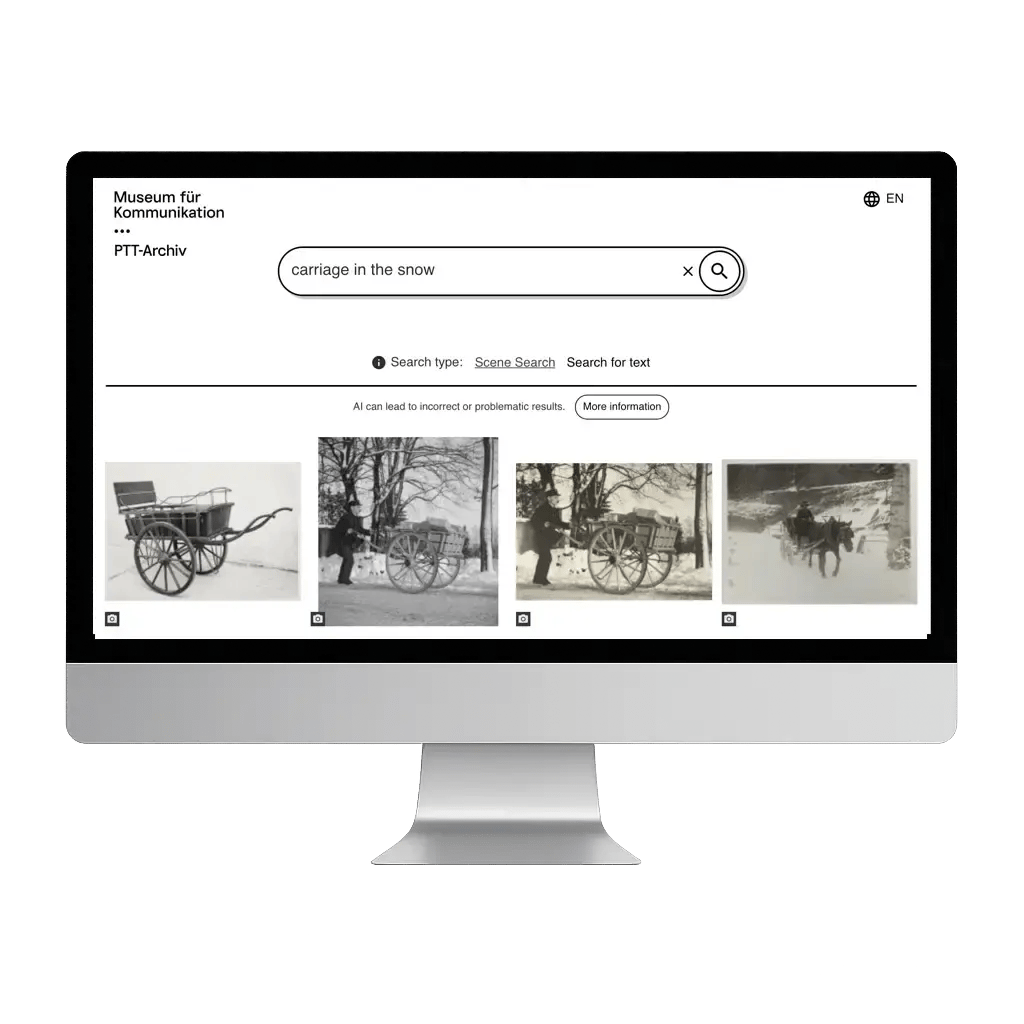
Around 40,000 digitised images from the museum’s photographic collections can now be explored by visual content. Staff and visitors can look for scenes, objects or activities across the whole set, even where no detailed descriptions exist.

bildschirm-bern-en

Bern City Archives

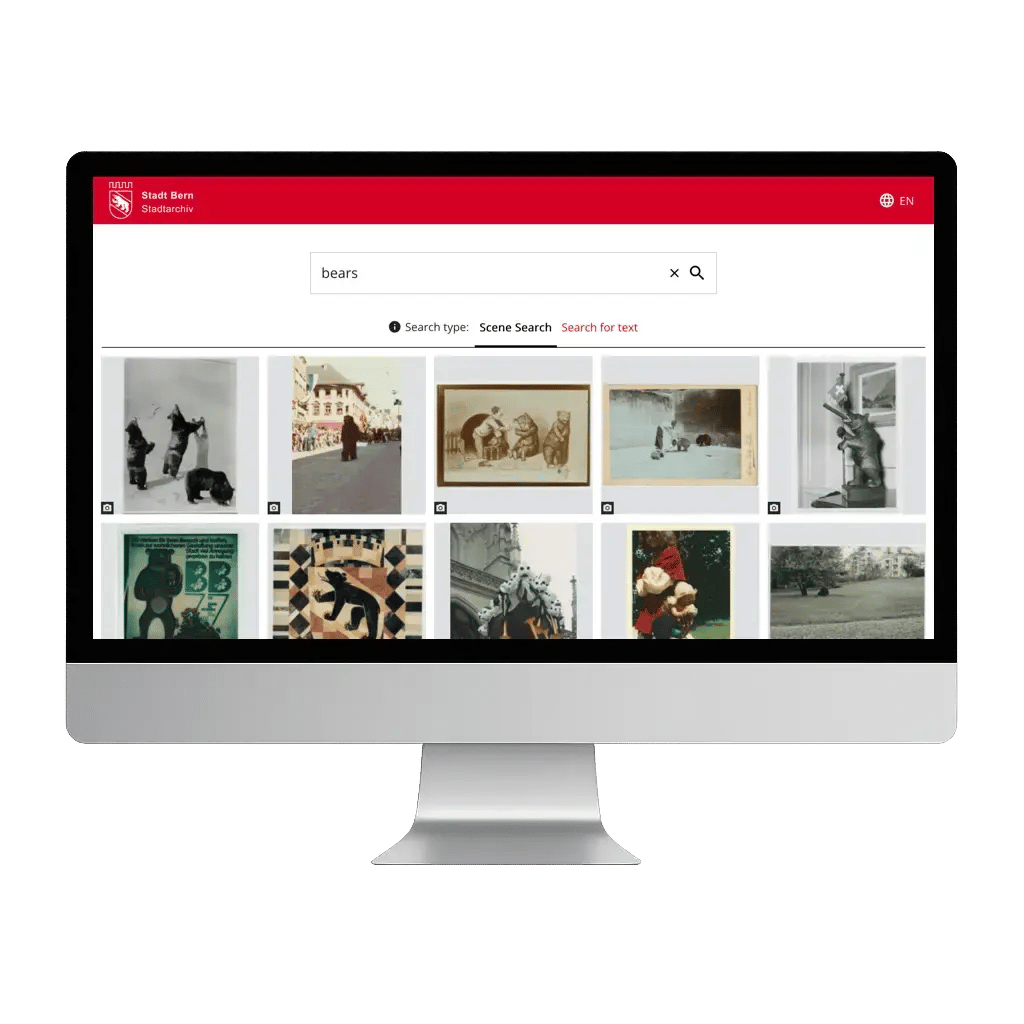
The Bern City Archives used visual search to open up around 8,000 digitised photographs from their collections. Users can search by what appears in the image and then use the existing online catalogue for full description and context.

Our process in 3 phases

From the initial idea to daily use - we support you with a clear and proven approach. In this way, we ensure that you get exactly the results you need for your work.

Phase 1: Analysis & planning

Understanding your visual collections.

  • Collections: We review samples of your image and video collections to understand formats, resolution, digitisation status, rights and existing metadata.

  • Digitisation: If parts of the collection are not yet digitised, we help you decide how best to do this, either with your own team or trusted partners.

  • Testing: We run a small test on a subset of images or video to confirm that visual search works.


Phase 2: Pilot project & review

A focused pilot to see how visual search behaves on your collections.  

  • Pilot dataset: We agree a manageable subset of images or videos that is representative of the wider collection. We then process this pilot set with AI to create visual “signatures” for each file.

  • Staff testing & review: Your team tries out visual search on this subset of images and reviews the results. 

  • Evaluation: Together we assess the outcome of the pilot, and ensure the project is ready to scale up.

Phase 3: Scaling & integration

We scale it up. 

  • Full collection: With the pilot completed, we apply visual search to the rest of your collection.
  • Access & interface: We provide a search interface that allows staff and, if desired, the public to explore and filter your collection by visual content.

  • Integration & training: We support your team as they integrate visual search into existing catalogues, websites or portals, and provide guidance so staff can use it confidently in their work.

Ready to explore this approach for your collections?

Let’s look at your material, your goals and what kind of results you could realistically expect. A short call is enough to see whether this approach is a good fit for your collections.

Gain metadata with Archipanion AI support?

Explore our Case Studies

AI visual search is particularly powerful for press-agency archives, photography sets, poster and postcard collections, public-sector image holdings, and corporate image or video archives - anywhere collections are large and item-level description is limited. If you're interested in how our clients are using it, explore our case studies.